How Preserved Flowers in Jewelry Are Made: A Behind-the-Scenes Look
Preserved flower jewelry captures ephemeral botanical beauty and transforms it into wearable art that endures for generations. The meticulous craft behind these pieces intertwines horticultural knowledge, artistic vision, and jewelry-making precision to create adornments that tell stories of sentiment and nature's grace. Understanding the intricate processes that bring these creations to life reveals why each piece carries both visual splendor and profound meaning.
The Art of Selecting and Harvesting Botanical Materials
The journey begins long before any metal is shaped or resin is poured. Artisans must identify flowers at their peak vibrancy, when petals display their most saturated hues and structural integrity remains robust. Timing proves critical—harvesting too early yields underdeveloped blooms, while waiting too long results in fragile specimens prone to deterioration.
At Preciosa Jewelry Co., we source flowers from ethical growers who cultivate blooms without harsh pesticides, ensuring both environmental stewardship and wearer safety. Garden roses, forget-me-nots, baby's breath, and delicate ferns frequently grace our collections. Each botanical specimen undergoes careful inspection for imperfections, discoloration, or pest damage. Only pristine samples advance to the preservation stage, as flaws become magnified once encapsulated within resin or glass.
The harvesting ritual itself demands reverence. Morning hours, after dew has evaporated but before midday heat stresses the plants, offer optimal conditions. Scissors receive frequent sterilization to prevent bacterial transfer. Stems are cut at precise angles to maximize moisture retention during the brief window before preservation begins.
Preservation Techniques That Suspend Time
Desiccant Drying Method
One of the most prevalent preservation approaches employs silica gel desiccants that extract moisture while maintaining chromatic brilliance and three-dimensional form. Flower heads nestle within fine silica crystals inside airtight containers, where humidity vanishes over five to fourteen days depending on bloom density and petal thickness.
This method excels at retaining the original flower architecture. Roses maintain their layered petal arrangement, while daisies preserve their radiating symmetry. The desiccant granules support delicate structures during the dehydration process, preventing collapse that air-drying methods often cause.
Pressing and Flattening Techniques
For jewelry designs requiring two-dimensional botanical elements, traditional pressing techniques prove invaluable. Flowers rest between absorbent papers within heavy books or specialized presses, where consistent pressure gradually removes moisture while flattening the specimen. This centuries-old method produces paper-thin botanical silhouettes perfect for incorporation into pendant backings and earring surfaces.
Pressed flowers develop a translucent quality that allows light to filter through their delicate membranes, creating luminous effects when paired with metalwork. Ferns, pansies, and Queen Anne's lace respond particularly well to this treatment, their intricate vein patterns becoming even more pronounced.
Glycerin Preservation for Pliability
Some artisans utilize glycerin solutions to replace the natural water content within plant tissues. This substitution maintains suppleness and produces specimens that remain flexible rather than brittle. The process involves submerging stems in a glycerin-water mixture, allowing capillary action to draw the preservative throughout the plant structure over several weeks.
While this technique requires extended processing time, it yields botanicals with a soft, almost leather-like texture that resists shattering. The resulting flowers often develop deeper, more saturated tones—whites transition to ivory, while pinks intensify to burgundy.
Preparing Preserved Flowers for Jewelry Integration
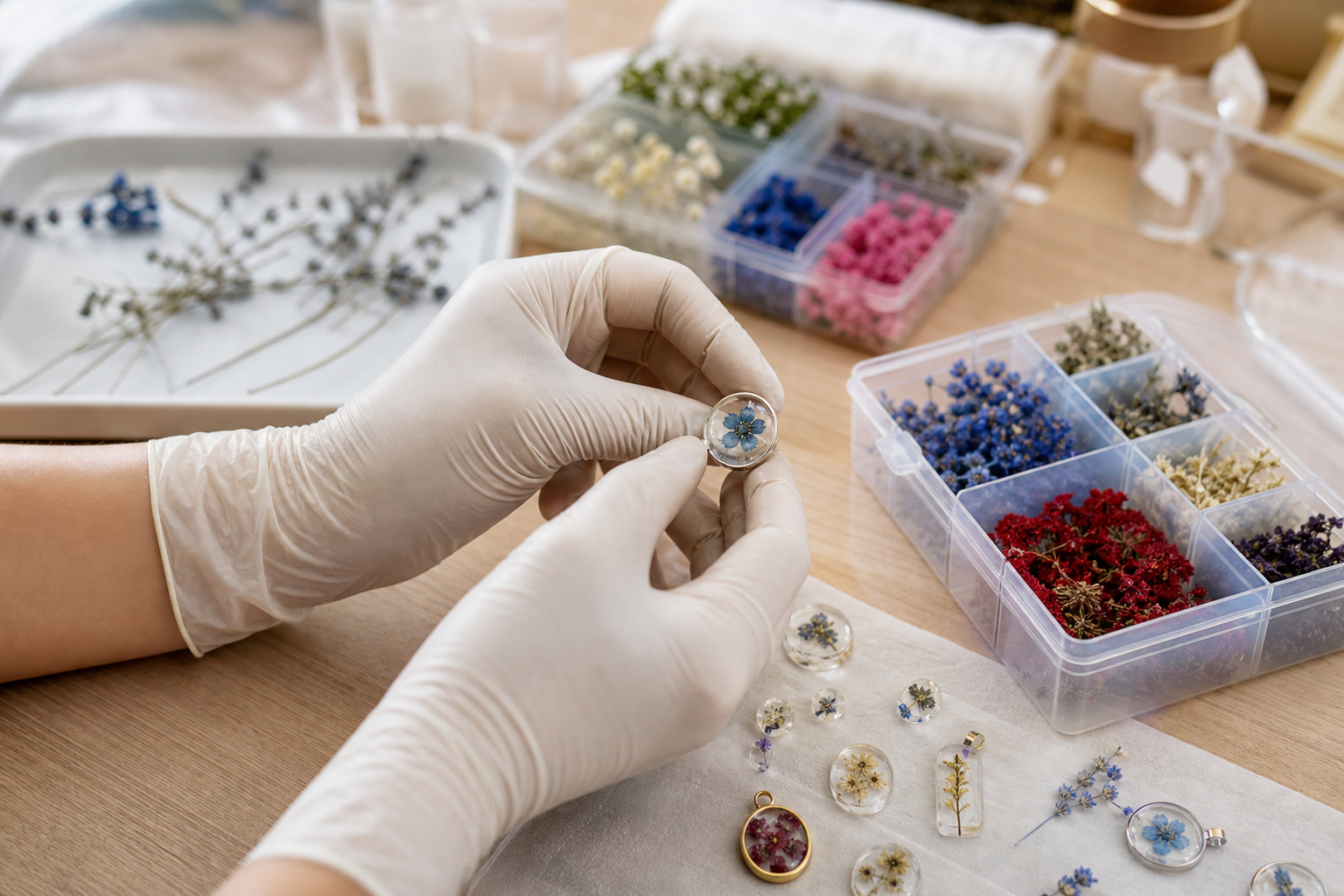
Once preservation completes, flowers undergo meticulous preparation before they can unite with precious metals. Excess stem material receives careful trimming, and any remaining foliage that might detract from the focal bloom gets removed. For resin-encapsulated designs, flowers may receive a light coating of sealant to prevent air pockets or discoloration when surrounded by liquid polymer.
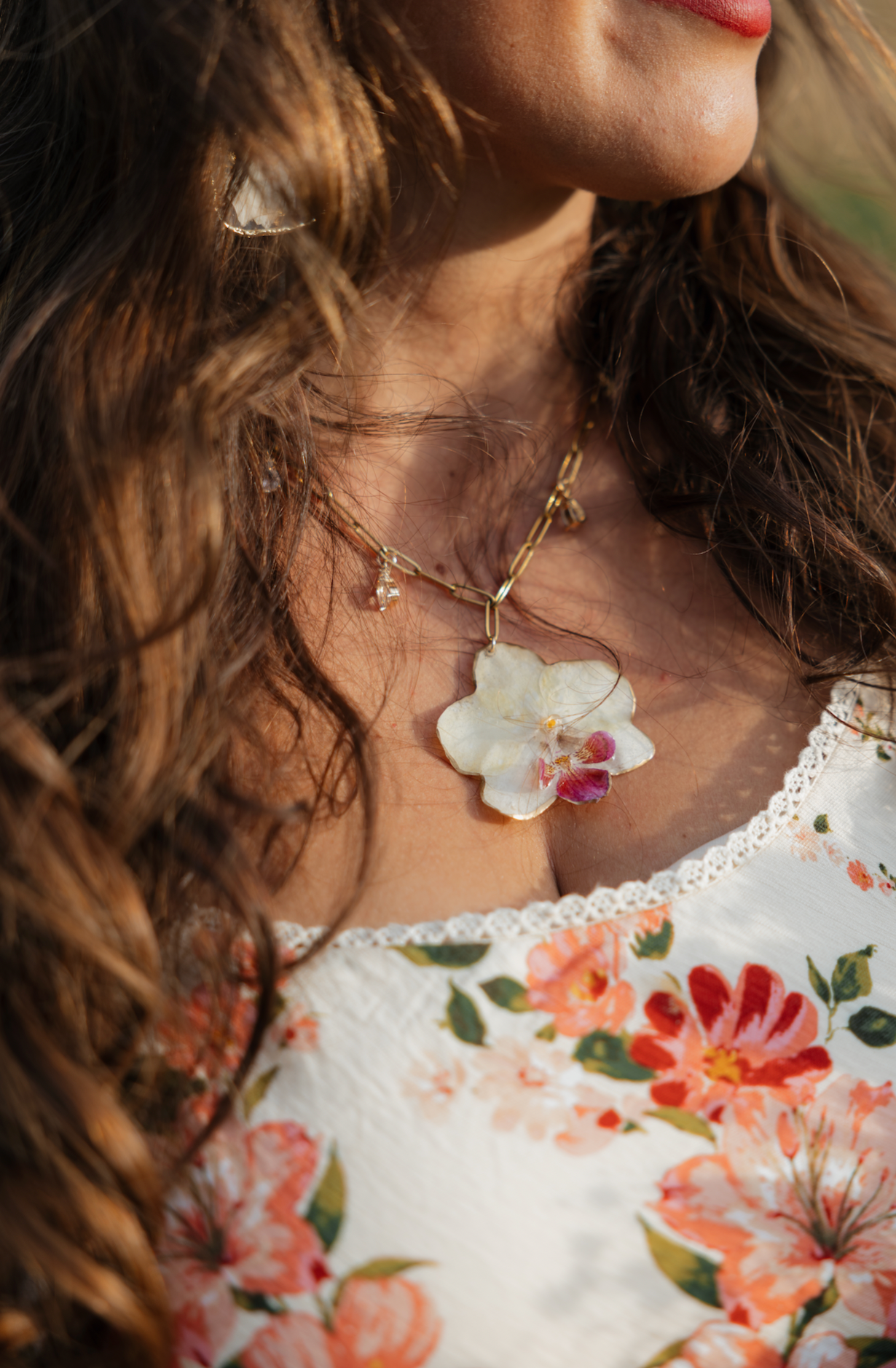
Size considerations govern which preserved specimens suit particular jewelry forms. Petite buds find homes in delicate stud earrings, while more substantial blooms anchor statement pendants. Artisans sometimes deconstruct larger flowers, utilizing individual petals to create mosaic-like arrangements within jewelry bezels.
Color coordination between botanical elements and metal choices occurs during this phase. Cool-toned flowers like lavender or blue hydrangea pair beautifully with silver or white gold, while warm-hued roses and marigolds complement yellow gold or rose gold settings. Hypoallergenic metals like surgical-grade stainless steel or titanium provide excellent canvases for those with metal sensitivities, ensuring everyone can wear these natural treasures without concern.
Encapsulation Methods: Protecting Beauty Behind Barriers
Resin Casting Fundamentals
High-clarity epoxy resin serves as the primary encapsulation medium for most preserved flower jewelry. This two-part polymer system begins as liquid components that, when mixed, initiate a chemical reaction culminating in a crystal-clear solid. The process demands precision—incorrect ratios produce cloudy or tacky results, while trapped air bubbles compromise visual clarity.
Artisans position preserved flowers within silicone molds or bezels, then pour thin resin layers incrementally. Each stratum cures partially before the next application, preventing botanical displacement and ensuring comprehensive coverage. Some creators employ vacuum chambers to eliminate microscopic air pockets that escape notice during standard degassing procedures.
Curing times vary based on environmental factors. Warmer temperatures accelerate the polymerization process, while humidity can introduce cloudiness. Professional studios maintain climate-controlled workspaces where temperature and moisture levels remain constant, ensuring predictable results across production batches.
Glass Dome and Terrarium Settings
An alternative encapsulation approach utilizes miniature glass domes or crystal capsules that house preserved flowers in protective chambers. These settings often incorporate tiny stems and foliage arrangements, creating three-dimensional botanical vignettes viewable from multiple angles.
The glass components require careful sealing at their base to prevent moisture infiltration while maintaining visual seamlessness. Some designs incorporate cork or metal bases engraved with meaningful inscriptions or dates, transforming the jewelry into commemorative keepsakes marking significant life moments.
Metalwork and Setting Creation
While the preserved flowers provide organic beauty, the metalwork supplies structural integrity and aesthetic framing. At our Greensburg studio, we handcraft each metal component using traditional jewelry-making techniques that honor centuries of metalsmithing tradition.
Bezels—the metal frames that cradle resin-encased flowers—begin as flat strips of metal that receive precise measurement, sawing, and soldering. The seam where ends meet must achieve perfect flush alignment to prevent weakness or visual disruption. After forming the circular or oval shape, bezels undergo filing to eliminate sharp edges that might catch on clothing or irritate skin.
Backplates provide foundation and often feature decorative elements like hammered textures, stamped patterns, or engraved passages of scripture for faith-inspired pieces. These textural variations catch light differently than smooth surfaces, adding depth and visual interest to the completed adornment.
Findings—the functional hardware like earring posts, pendant bails, and chain connections—receive careful selection to ensure they match the piece's overall aesthetic while providing reliable functionality. Hypoallergenic posts with secure butterfly backs prevent loss while accommodating sensitive ears.
Assembly and Finishing Processes
Assembly represents the culmination where botanical and metallic elements unite into cohesive jewelry. Once resin achieves full cure—typically seventy-two hours for complete hardness—excess material receives careful sanding to achieve perfectly flush surfaces with bezel walls.
Progressive grits of sandpaper, from coarse to ultra-fine, smooth away irregularities without scratching the resin surface. Wet sanding during final stages prevents heat buildup that could create cloudiness. Some artisans employ rotary tools with polishing compounds to achieve glass-like clarity that makes preserved flowers appear suspended in liquid.
Metal components receive finishing treatments that range from mirror-bright polishing to deliberately oxidized patinas. Tumbling barrels filled with steel shot burnish surfaces while work-hardening the metal, increasing durability. Oxidation creates dramatic contrast, darkening recessed areas while leaving raised surfaces bright—a technique that accentuates textural details.
"Each piece we create holds a fragment of nature's fleeting beauty, preserved through intention and craft so wearers carry botanical wonder wherever their journey leads."
Quality Control and Longevity Considerations
Before any jewelry leaves our studio, rigorous inspection ensures it meets exacting standards. Resin clarity, metal finish uniformity, finding security, and botanical positioning all receive scrutiny. Even minor imperfections that might escape casual notice can detract from the heirloom quality we pursue.
Longevity remains paramount for jewelry intended to endure across generations. Proper preservation techniques prevent color fading, while UV-resistant resin formulations protect against sun exposure that degrades standard polymers. Metal choices impact durability—higher karat golds resist tarnish better than lower alloys, while platinum offers unmatched longevity despite higher cost.
Care instructions accompany each piece, educating wearers about practices that extend beauty. Avoiding prolonged water immersion, removing jewelry before applying lotions or perfumes, and storing pieces away from direct sunlight all contribute to preservation.
The Emotional Dimension: Beyond Technical Execution
Technical proficiency alone cannot create jewelry that resonates emotionally. The most treasured pieces capture specific moments—wedding bouquets, memorial flowers, garden blooms from a cherished home. This sentimental dimension transforms preserved flower jewelry from mere adornment into tangible memory vessels.
Custom commissions allow clients to provide flowers from personally significant occasions. Preciosa Jewelry Co. carefully receives these precious botanicals through specialized shipping or local delivery, treating each stem with the reverence it deserves. The resulting jewelry becomes a wearable narrative, a conversation piece that carries stories across time.
Faith-inspired designs incorporate symbolism that speaks to spiritual journeys. Roses might represent divine love, while wheat stalks evoke harvest blessings. Incorporating scripture references or meaningful dates through engraving layers additional significance onto already profound pieces.
Sustainability and Ethical Considerations
Conscious consumers increasingly seek products aligned with their values. Preserved flower jewelry inherently embraces sustainability by capturing botanical beauty without continued resource consumption. A single bloom, properly preserved and encapsulated, provides decades of enjoyment without wilting or requiring replacement.
Ethical sourcing extends beyond flowers to encompass every material. Conflict-free metals, recycled precious materials, and domestic sourcing reduce environmental impact while supporting responsible supply chains. Small-batch production minimizes waste compared to mass manufacturing, and handcrafted approaches eliminate the energy-intensive processes industrial production requires.
Woman-owned businesses like ours contribute to economic equity while often maintaining stronger community connections. Local production supports regional economies and allows for direct customer relationships that inform design evolution based on authentic feedback.
Common Questions About Preserved Flower Jewelry Creation
How Long Does the Complete Creation Process Take?
From initial flower harvest through final polishing, creating preserved flower jewelry typically requires two to four weeks. Preservation alone consumes one to two weeks, while resin curing adds another three to five days. Custom pieces incorporating intricate metalwork or personalized engraving may extend timelines further.
Can Any Flower Species Be Successfully Preserved for Jewelry?
Most flowers can undergo preservation, though results vary by species. Blooms with naturally low moisture content like statice and strawflowers preserve exceptionally well. High-moisture specimens like tulips or lilies prove more challenging but remain viable with proper technique. Delicate flowers risk structural collapse, though skilled artisans develop methods to support fragile varieties during processing.
Will Preserved Flowers Eventually Fade or Deteriorate?
With appropriate preservation methods and UV-resistant encapsulation, preserved flowers maintain their appearance for decades. Some minimal color shift may occur over extremely long periods—vivid purples might soften slightly, while whites develop subtle cream tones. These gentle patinations often enhance rather than diminish the piece's character, much like antique photographs gain nostalgic appeal through sepia tones.
The Intersection of Craft and Commerce
Beyond individual retail pieces, preserved flower jewelry sustains various business models. Mobile jewelry workshops bring the craft directly to communities, allowing participants to create their own botanical adornments under expert guidance. These intimate gatherings foster connection through shared creative experience while demystifying the artistic process.
Wholesale partnerships with boutiques and gift shops extend reach while maintaining handcrafted quality. Small-batch production ensures each wholesale order receives the same attention as custom commissions, preserving the artisanal character that distinguishes these pieces from mass-produced alternatives.
The growing appreciation for meaningful, personalized jewelry suggests promising futures for artisans specializing in preserved botanicals. As consumers increasingly value craftsmanship, sustainability, and emotional resonance over disposable fashion trends, jewelry that embodies all these qualities finds receptive audiences.
Creating preserved flower jewelry requires patience, precision, and profound respect for both natural materials and metalworking traditions. Each piece represents hours of deliberate effort across multiple disciplines—botany, chemistry, metallurgy, and artistic composition unite to produce wearable art that transcends typical jewelry categories. For those who wear these pieces, they carry fragments of nature's beauty and personal history, transforming everyday adornment into heirloom treasures that speak across generations.